
Scritchy Scratchy tips and tricks for a Steadier Run
Use luck, careful card selection, and smart automation to make progress in Scritchy Scratchy. Learn how peeking works and avoid costly mistakes.
Jump to
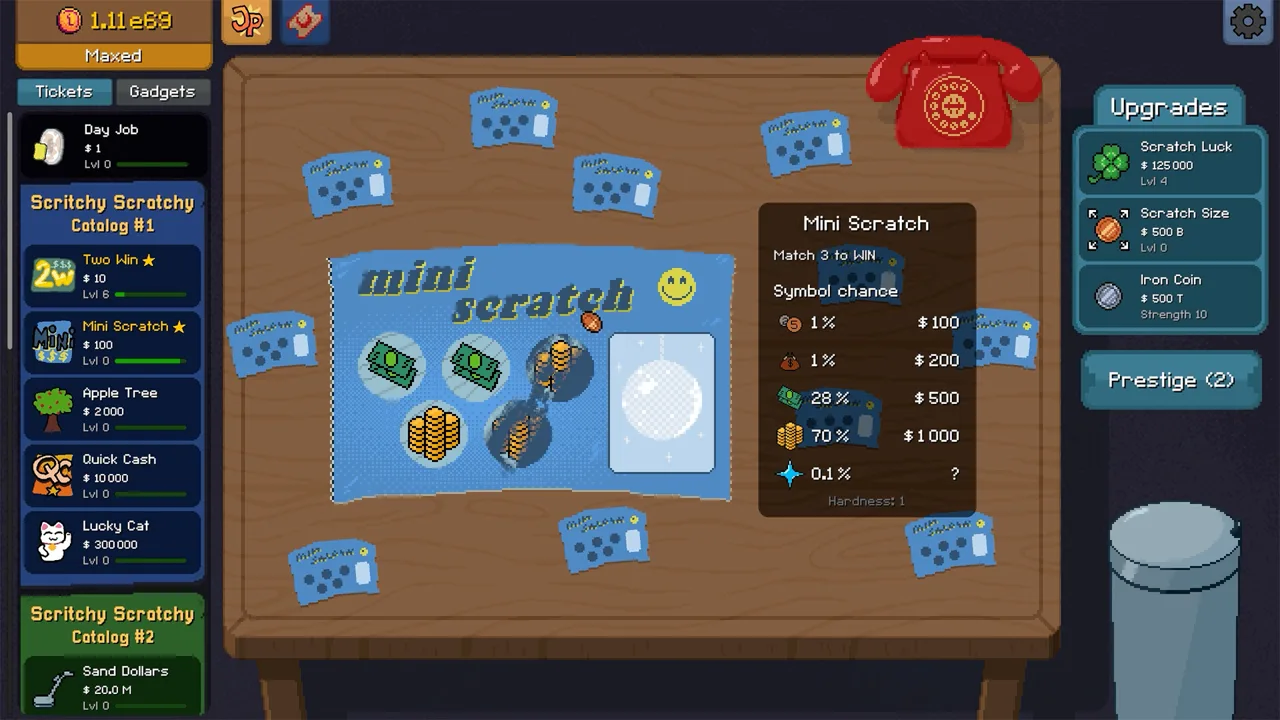
Start With Luck, Then Build Your Setup
A few risky scratches can undo a promising run in Scritchy Scratchy, but planning can help you make more deliberate choices. These Scritchy Scratchy tips and tricks focus on decisions that shape a run: which upgrades to buy, which tickets to scratch by hand, and when to let automation take over. Use these Scritchy Scratchy tips and tricks to keep money moving while watching for cards that can punish a careless scratch.
In player experience shared through two videos, luck affects ticket outcomes and can help make some dangerous cards safer as it rises. The videos also describe luck as relevant to access to better tickets. Automation can reduce repetitive scratching, but you still choose which tickets to feed the bot.
| Topic | What the sources describe | Practical note |
|---|---|---|
| Ticket outcomes and access | Player videos say luck affects outcomes and can make some dangerous cards safer as it rises | Check your luck against a card’s stated requirement before using it |
| Quick Cash and Simple Match | The sources describe Quick Cash as stable; Simple Match is a basic card whose prize increases with level while its cost stays the same | Compare a card’s risk and payout before choosing what to scratch |
| Scratch bot | Player videos describe it processing queued tickets automatically | Keep risky tickets out of its queue so you can inspect them |
| Manual scratching | Player videos describe peeking at symbols before revealing them fully | Use partial scratches to look for clues on cards with harmful symbols |
These notes reflect the mechanics and player experience in the supplied sources; they do not guarantee that every run will unfold the same way. Treat each ticket as a choice: check its risk, consider your current luck, and decide whether the potential reward justifies scratching it. Luck, card selection, and automation all affect how you approach a run, so consider them together rather than treating every ticket alike.
Choose Tickets and Scratch With Care
A core part of these Scritchy Scratchy tips and tricks is recognizing that the card catalog offers different kinds of risk; the Scritchy Scratchy tips and tricks below also explain how partial scratches can help you inspect a symbol before revealing it fully. Player videos describe Quick Cash, Mini Scratch, and Sand Dollars as safer options, while Apple Tree, Lucky Cat, Scratch My Back, and Snake Eyes can carry dangerous symbols or penalties. The official walkthrough also identifies Snake Eyes and Apple Tree or Lucky Cat as cards that call for caution.
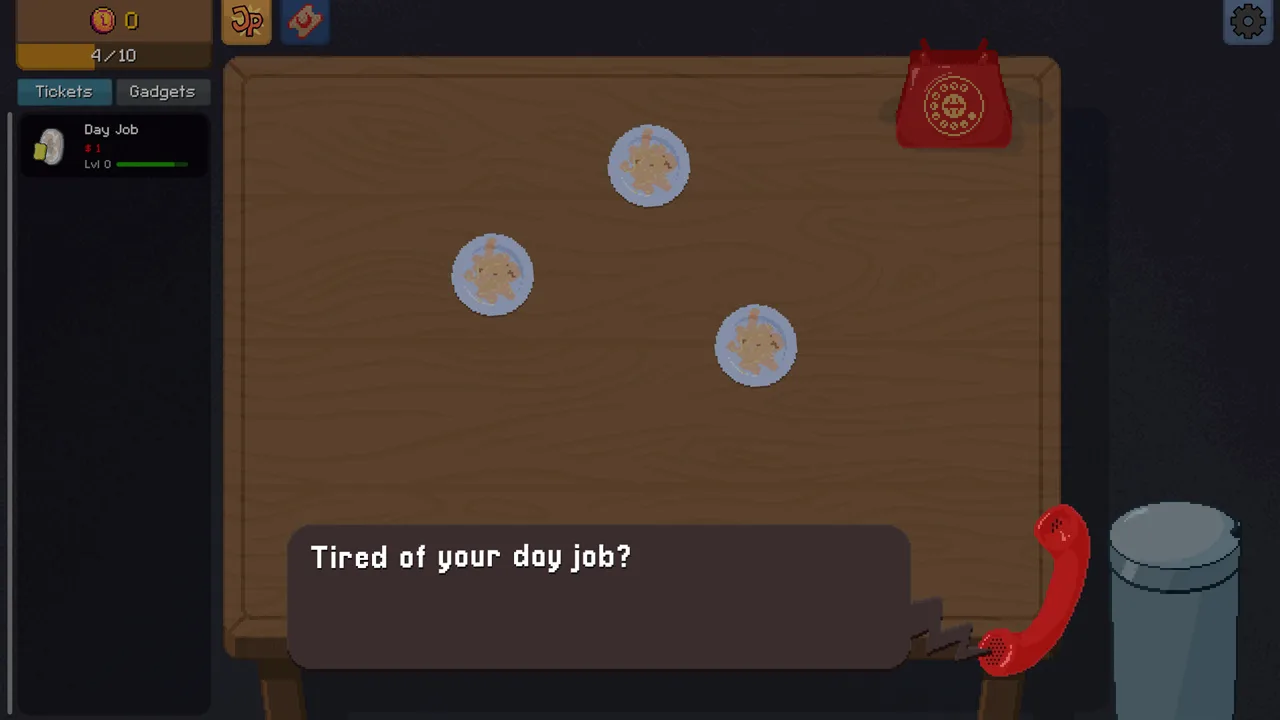 Image: Steam / Lunch Money Games
| Ticket or card | What the sources describe | Handling note |
|---|---|---|
| Quick Cash | A player video describes it as stable, and the walkthrough mentions stable cards in the Quick Cash style | A player video describes using safe cards for leveling and moneymaking |
| Simple Match | The walkthrough describes it as a basic card whose level raises prizes while cost stays the same | Keep its level and cost behavior in mind when comparing tickets |
| Snake Eyes | A “1” can cause a major loss; empty die corners can signal danger | Scratch the corners first; if they are empty, the player video recommends discarding the card |
| Apple Tree / Lucky Cat | Player videos describe worms or black cats as dangerous symbols | Scratch only a small edge first and stop if you spot a harmful symbol |
| Scratch My Back | The walkthrough describes jellyfish as rewards and plastic bags as penalties | Partially scratch a symbol before deciding whether to continue |
Peeking means scratching only a small part of a symbol before committing to reveal it fully. In a player video, this technique is used to look for clues such as a worm on Apple Tree or a black cat on Lucky Cat. If you see a harmful symbol, the video recommends throwing that card away. The official walkthrough likewise recommends checking corners on Snake Eyes and partially scratching Scratch My Back.
The Snake Eyes corner check relies on the die’s dots: the player video explains that a “1” has a centered dot, leaving the corners empty, while higher numbers such as four, five, and six have corner dots. If a corner is empty, that video advises discarding the card rather than scratching the rest. This lets you check for the dangerous result without fully revealing the die.
A negative result does not always require you to finish the card. A player video says you can click the trash can while a card is open to discard it instead of taking the loss. That gives you another reason to pause when a symbol looks bad: inspect what you have revealed, then decide whether continuing is worth it.
A good approach is to separate cards by how safely they can be handled. Player videos describe using safe cards for leveling and moneymaking, while risky tickets are better suited to careful manual inspection. Scratching every card the same way removes your chance to react to a harmful symbol before it is fully revealed.
Automate the Predictable Work
The scratch bot can save effort, but full automation can also scratch a dangerous card before you have a chance to react; these Scritchy Scratchy tips and tricks keep the distinction between predictable and risky tickets in view. Player videos recommend a division of labor: let the bot handle predictable tickets and keep risky ones for manual scratching. That way, you can use peeking on cards where a hidden symbol matters.
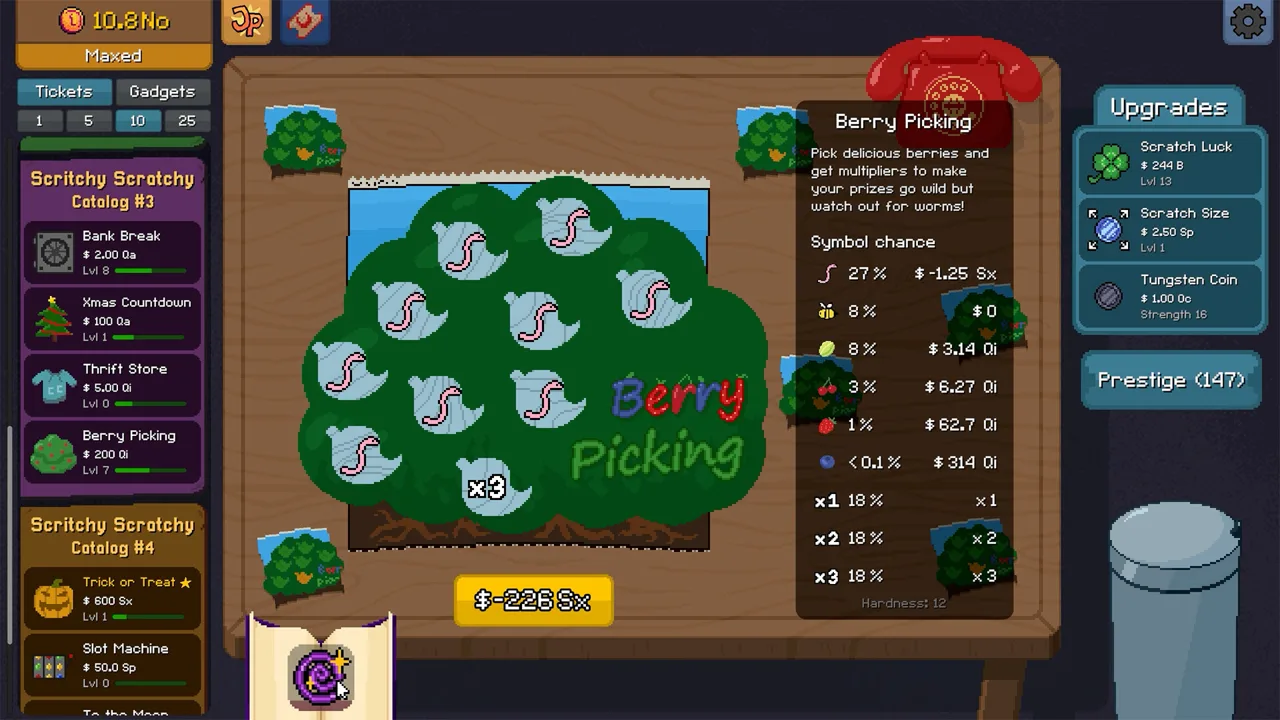 Image: Steam / Lunch Money Games
| Tool or setup | Role described in the sources | Practical note |
|---|---|---|
| Scratch bot / autoscratcher | Processes queued cards automatically | Player videos recommend feeding it predictable tickets |
| Fan | Moves tickets toward the bot; too many at once can create a processing bottleneck, according to a player video | Use it in controlled bursts and watch the bot’s queue |
| Subscription bot | Buys cards automatically, according to player videos | It is one component of a later automated setup |
| Mundo / Mond | Player videos spell the name Mundo; the official walkthrough spells it Mond. Both describe a cat helper related to tickets | Check the name used in your game when following a specific description |
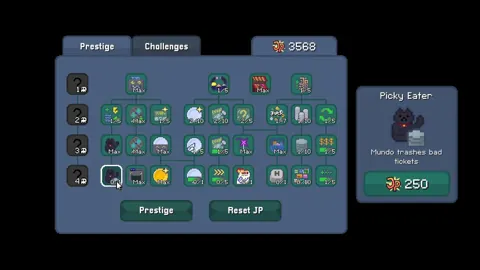
| Picky Eater | The walkthrough describes it as a cat that automatically discards losing tickets | The walkthrough identifies it as useful when cards repeatedly lose money |
The fan is a good example of why feeding more tickets does not always mean faster processing. A player video describes continuously blowing tickets into the bot, which caused a queue to build and slowed the prize sequence. Short bursts give you a chance to observe the bot’s pace and avoid overwhelming it.
As your setup grows, ticket purchasing, scratching, and collection can work together. A player video describes using the subscription bot, Mundo, and scratch bot at the same time, then adding Picky Eater to filter losing tickets. The video says this setup depends on unlocking its pieces at different stages, so it is a later combination rather than an early-game shortcut.
The walkthrough also describes an autoscratcher that processes queued cards and can run in the background, with capacity and speed upgrades. It advises limiting automated input to high-value, stable cards and handling risky cards manually. The player videos similarly caution against putting every card on the bot, since it cannot pause to peek at a symbol before revealing it.
Spend Carefully and Time Each Reset
Upgrades compete for your money and other resources, so these Scritchy Scratchy tips and tricks focus on choices that support the run you are building; use these Scritchy Scratchy tips and tricks to compare the source-described effects before spending. Player videos recommend investing in luck early and then working toward automation. One video also describes upgrading older ticket levels before moving quickly into new ones; the walkthrough says Simple Match prizes rise with its level while its cost stays the same.
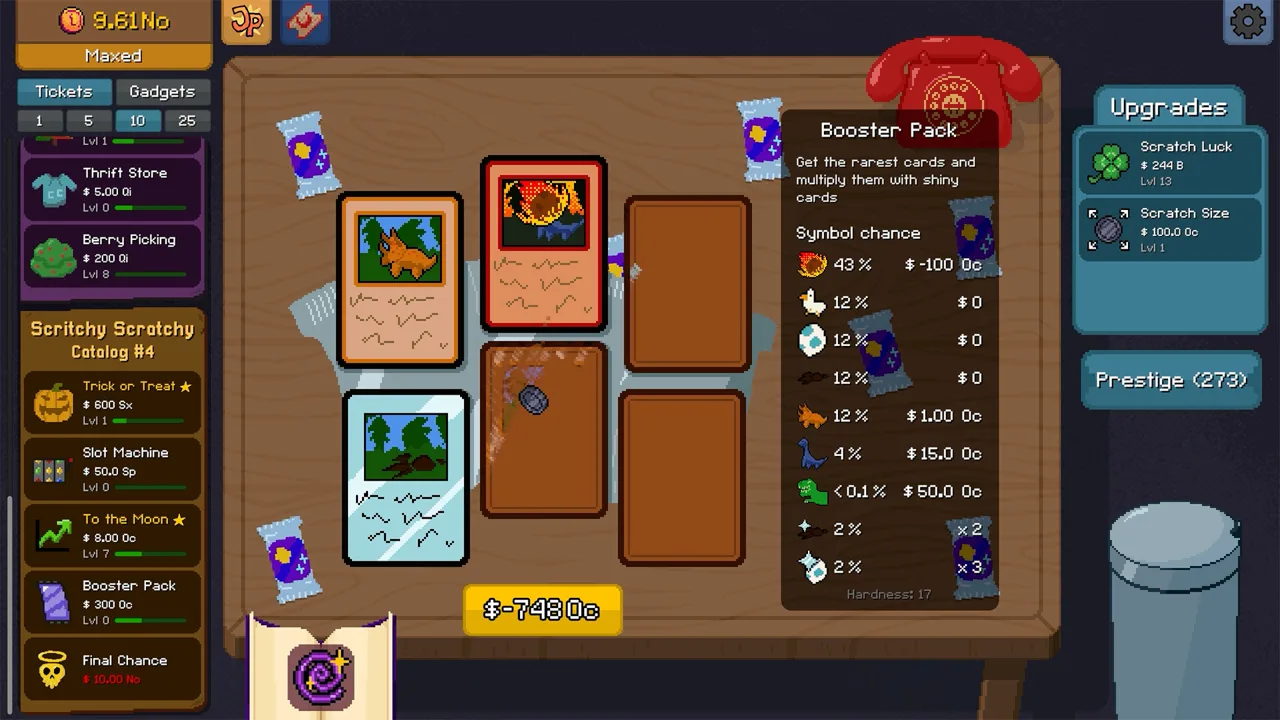 Image: Steam / Lunch Money Games
| Source-described effect | What the sources say | Practical note |
|---|---|---|
| Ticket outcomes and access | Player videos say luck affects outcomes and can make some dangerous cards safer as it rises | Consider it when judging whether a risky card is suitable for your run |
| Ticket processing | Player videos describe the autoscratcher and its upgrades as ways to process tickets with less manual input | Choose which cards enter the automated queue |
| Simple Match level | The walkthrough says its prizes increase with level while its cost stays the same | Compare those details with the other tickets available to you |
| Night Market | A player video describes coin strength and size upgrades that affect manual scratching | Achievement tokens are the currency the video says to spend there |
Loans deserve extra caution. A player video says their interest rates are brutal and that debt can bring random negative effects. A media guide states that 6000% interest is required to remove loan debuffs. Given those stated costs and effects, a good approach is to weigh the consequences before borrowing rather than treating a loan as free money.
The Night Market offers another use for achievement tokens. A player video says these tokens come from completing achievements and describes upgrades to coin strength and size, along with gadget cosmetics that may have small functional bonuses. The same video says coin upgrades affect manual scratching, including peeking and working with difficult symbols. Consider those described effects when deciding whether to spend tokens there.
Reset timing also affects a run. A player video describes Final Chance as part of the prestige loop and warns that using it as soon as it appears can leave JP on the table. It recommends getting what you can from the current round before resetting. Another player video says to consider finishing a ticket when you are close to a jackpot before triggering Final Chance. The videos describe JP rewards differently from the walkthrough, so check the game’s current in-game information before relying on a specific payout explanation.
The Scritchy Scratchy complete walkthrough and strategy guide covers card strategies, automation, and progression systems.
FAQ
What should I upgrade first in Scritchy Scratchy?
Player experience in the supplied videos recommends investing in luck early, then moving toward automation. Those videos say luck affects ticket outcomes, while automation can process tickets with less manual input. For more Scritchy Scratchy tips and tricks, compare those effects with the needs of your current run.
Which cards should I scratch manually?
Keep cards with potentially harmful symbols in your manual queue. Player videos and the walkthrough flag Snake Eyes, Apple Tree, Lucky Cat, and Scratch My Back for extra care. Peeking can help you inspect a symbol before revealing it fully.
Should I automate every ticket?
The player videos recommend automating predictable cards while handling risky cards manually. The bot can scratch a queued card without pausing to inspect a symbol, so choosing what to feed it matters.
When should I use Final Chance?
Player videos advise against triggering Final Chance as soon as it becomes available. Consider whether you are close to finishing a ticket with a jackpot opportunity before resetting, and check the game’s current instructions for how rewards work.
Continue with
 Scritchy Scratchy walkthrough: Step by Step to the EndingStart with available upgrades and affordable tickets, then build income and use the scratch bot while saving toward the machine and Final Chance.
More in Guide
Scritchy Scratchy achievement guide to All 34 Goals
Use this Scritchy Scratchy achievement guide to plan your runs, handle tricky unlocks, and work toward all 34 achievements, including Achievement Hunter.
Scritchy Scratchy guide to Income, Upgrades, and the Ending
Use this Scritchy Scratchy guide to grow ticket income, prioritize upgrades, manage risky cards, and prepare for the Final Chance. Includes a short FAQ.
Scritchy Scratchy how long to beat: Playtime by Goal
Compare Scritchy Scratchy playtime estimates for the main story, completionist runs, and a player video’s speedrun route to reach the ending.
Scritchy Scratchy how to win: A Practical Final Chance Guide
Learn how to earn money, manage scratch cards, upgrade your tools, and prepare for the Final Chance in Scritchy Scratchy. Includes tables and an FAQ.
Join the community
Official channels for news, updates and player help: